



If you run distribution in the UAE, you already know the numbers that matter: cases per truck, trips per day, and cost per case delivered. What many operators miss is how much of that equation is decided before the truck even leaves the DC, by the equipment you load it with.
At first glance, the Euro pallet looks like the stronger performer. It carries more cases per unit than a roll cage. But when you look at the full truck, not the single unit, the picture reverses. This is the cubing effect, and in live Dubai trials it delivered a 23% increase in cases per vehicle.
The Counterintuitive Maths: Fewer Cases Per Cage, More Cases Per Truck
Here is the part most comparisons get wrong.
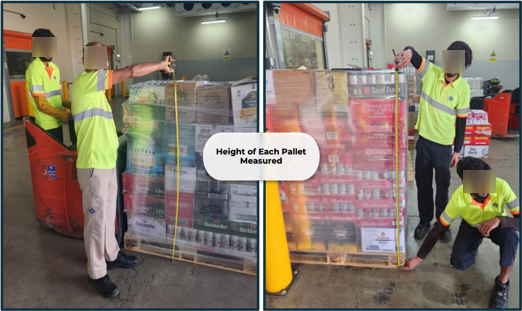
A Euro pallet averages around 50 cases when loaded to operational benchmark. A roll cage, loaded to 169cm, averages around 36 cases. On a unit-for-unit basis, the pallet wins.
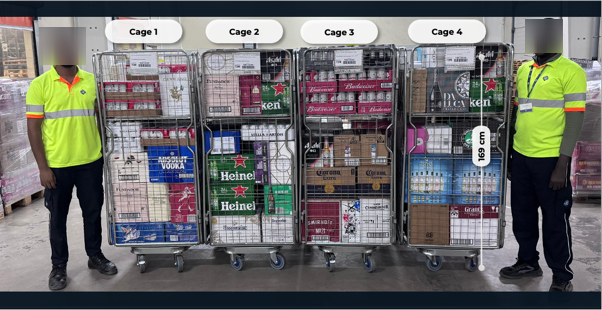
But trucks aren’t loaded one unit at a time — they’re cubed. And this is where the roll cage’s smaller, taller footprint changes the outcome:
- A 4.2 ton SWB truck fits 7 Euro pallets, giving roughly 350 cases per load (8.46 CBM).
- The same truck fits 12 roll cages, giving roughly 432 cases per load (9.64 CBM).
Fewer cases per unit, multiplied by more units per truck, produces a higher total: 432 vs 350 cases; a 23% improvement in vehicle fill from the same vehicle, the same driver, and the same route.
Where Pallets Lose Space on UAE Routes
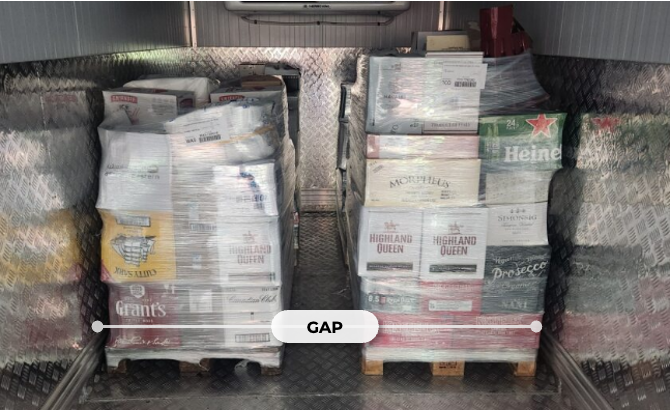
The pallet’s disadvantage isn’t the pallet itself — it’s the space it wastes around it. In the Dubai trials, measured losses included a 32cm gap between pallets inside the truck and 44–74cm of lost space at the front of the load bay. Add the pallet jack and dolly that must travel with the vehicle, and usable cargo space shrinks further.
Steel roll cages, by contrast, can be specified to the vehicle, a custom roll cage designed around your truck dimensions rather than a one-size pallet forced into them. GLS’s GCC Rollcage, designed specifically for the UAE market, fits 15 cages into a SWB 4.2 ton truck against 10 standard cages, a 50% gain in loading efficiency on the region’s most common distribution vehicle.
Roll Cage Benefits That Compound Across the Fleet
The cubing gain from transport roll cages compounds trip after trip:
- Fewer trips for the same volume. A 23% fill improvement means roughly one truck in five comes off the road — or the same fleet absorbs growth without new vehicles.
- Lower cost per case delivered. Fuel, driver hours, and vehicle wear are spread across more cases per trip.
- Faster turnaround at both ends. Cages roll straight off the tail-lift and into the store — in the same Dubai trials, offloading time per unit of stock dropped by around 40% at like-for-like stores.
- Less damage in transit. Rigid cage sides prevent weight-shift, contributing to a measured 20% reduction in product damages compared with shrink-wrapped pallets.
- No shrink wrap. Removing plastic wrap cuts consumable cost and packaging waste on every load — a practical sustainability gain, not a token one.
Cubing Is a Fleet Decision, Not an Equipment Purchase
The lesson from the trial data is that equipment choice sets the ceiling on fleet productivity. You can optimise routes and schedules all you like, but if every truck leaves the DC with 20% of its capacity lost to gaps, wrap, and handling equipment, that inefficiency is baked into every delivery.
For UAE retailers, FMCG distributors, and 3PLs, the roll cage converts wasted cube into delivered cases. The maths is simple: more cages per truck beats more cases per pallet.
About GLS
GLS International is the largest supplier of roll cages in the Middle East, with over 20 years in the returnable packaging industry and more than 100 million equipment movements annually across the group. Our GCC Rollcage was engineered specifically for UAE vehicle specifications and store environments.
Want to see what better cubing would do to your cost per case? Contact GLS at [email protected] or +971 56 609 0638 to arrange a trial on your own routes.


Truck Cubing in the UAE: Why Roll Cages Move More Stock Per Vehicle Than Pallets
The pallet’s disadvantage isn’t the pallet itself — it’s the space it wastes around it. In the Dubai trials, measured